There are 72 million pet dogs and 82 million pet cats in the United States. The pet population has an impact just as we do, but the difference is that we’re making the calls as to how we care for them, decisions that can also have strong impact on our health and the environment.
Here’s a few tips for greening up your pet:
1.) Adopt. The shelters are teeming with abandoned pets that are desperate for a home and the cost of adoption is minimal.
2.) Feed them right. Meat byproducts, commodity corn, and chemical fillers in pet food are as bad if not worse for them as they are for us. Nourish their little bodies with brands that are certified to have the good stuff or make your own pet food!
and 3.) Compost pet waste. Keep it out of your vegetable garden but it use it your flower beds and lawns for them to come up really strong!
For more ways to green your pet, check out some of the following sites:
Grassroots movements converge on Washington to urge the Obamas to appoint the nation’s First Farmer.
It wasn’t difficult for the first family to decide on a personal chef - Sam Kass has been preparing them local and organic meals since their Chicago days. But now that the Obama’s every morsel is up for discussion, some feel that the food eaten by the President should come from his own land.
In response, three separate organizations have sprung up, all calling for one thing: Turn the White House lawn into farmland.
The first, called the White House Organic Farm Project is touring it’s “topsy-turvy” bus around the nation teaching the code of the green thumb.
Another group called “Eat the View,” with its 1,600+ members are all buying up virtual plots of the First Lawn as donations.
Lastly, a local Illinois farm family created WhiteHouseFarmer.com and attracted over 100 nominees for the position of First Farmer. Out of 56,000 votes, three emerged and have been recommended directly to the President.
The natural and digital worlds combine to help decrease the global impact of today’s internet addiction.
Nowadays it’s nearly impossible to imagine a world without the internet when just over a decade ago, the internet itself was scarcely a thing of the imagination. With it’s billions of users, the earthbound mechanisms that keep this digital universe expanding are showing signs that surfing the web can lead to an environmental wipeout.
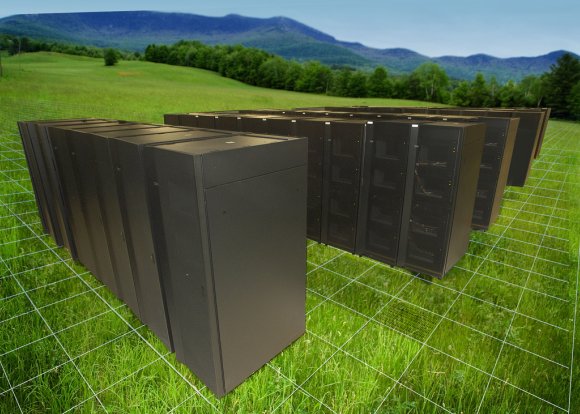
The bulk of the information that flows through our computers is stored and powered by a network of high-tech data centers. The hardware used at these sites needs shocking amounts of electricity that generates lots of heat.
New green data centers like Oregon-based Taproot Hosting, power their boards on 100% wind energy. They even tell their employees to stay home, opting for tele-commuting over terrestrial commutes. Other centers bury their gear, taking advantage of natural geothermal cooling instead of conventional air conditioning.
For more on how to reduce your carbon e-print, have a look at some of these sites:
$6 billion for clean and safe water, creating more than 200,000 jobs
This insures critical funding for the nation’s pipes and treatment plants. We don’t often worry too much about where our clean water comes from and this line seeks to keep it that way.
$4.5 billion for greening federal buildings
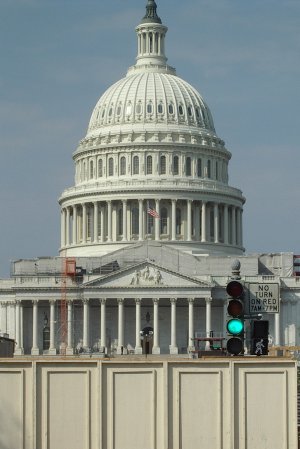
The Federal building codes and standards apply to buildings constructed or used by any Federal agency that is not legally subject to state or local building codes. This means that any building, not just the White House, Pentagon, Capital Building, etc., ANY building paying their energy bills with Federal money will be subject to completely revised energy efficiency performance standards which have been set by the DOE.
State energy grants, issued through the Treasury Department, that will fund renewable energy projects that are eligible for the available tax credits.
As of October of last year, the Energy Improvement and Extension Act of 2008 prolonged tax credits in solar, fuel cells, and microturbines; increased the credit amount for fuel cells; established new credits for small wind-energy systems, geothermal heat pumps, and combined heat and power (CHP) systems; extended eligibility for the credits to utilities; and allowed taxpayers to take the credit against the alternative minimum tax (AMT) subject to certain limitations. If you’ve got these systems already in place are are planning to build new ones, you should apply here.
Funding for the state energy program, which includes important utility reforms and building code conditions.
$2.5 billion for energy efficiency and renewable energy Research and Development.
In many cases, the technology just isn’t there yet and it takes resources to get there, hence, this line item.
$5 billion for the Weatherization Assistance Program, creating approximately 90,000 jobs
The expansion of this service will help the program reach a critical mass and deliver what it was designed to do - help low income families make energy efficiency improvements on their homes and spend less on utilities. See if you qualify here.
A multi-year extension of the renewable production tax credit.
Even greater insurance to individuals and corporations interested in these upgrades that their renewable energy improvements will be rewarded for many years to come. This is the kind of thing that boosts investor confidence in green stocks.
A more effective tax credit for home efficiency upgrades.
If you’re not eligible for the Wheatherization Assistance Program, now you can receive the big discounts on the home energy improvements you do yourself.
$6 billion in loan guarantees for renewables, transmission and leading edge biofuels
This is a great boon for companies investing in these industries. Now there will be real money to back up the loans guaranteed by the government. This comes as particular significance to the USDA.
$2 billion for advanced batteries
More than just rechargeable batteries for your TV remote, this category of tech development may be the most important. Certainly the automotive industry has a lot to gain with hybrid-electric vehicles seeking to replace the current fleet. Here’s an interesting piece from the US Advanced Battery Consortium (USCAR). The storage of electricity produced on a massive scale for residential and commercial use is also an integral component to making the new renewable grid happen.
$9.3 billion for intercity rail, including high-speed rail
With these new high-speed rail systems, the U.S. may actually be up to speed with the rest of the world. Here’s a little more on that idea.
$27.5 billion for highways (this large pot of money is not exclusively for highways, and states and cities must use this flexibility to invest in fuel-efficient public transportation)
While this may seem a bit imbalanced up against the public transportation budgets, the ethos behind it suggests the auto fleet will be markedly cleaner by the time the highways are improved. Like it or not, the U.S. is a car culture which means the industries and infrastructure must change to accommodate it.
$8.4 billion for transit
$1.5 billion in competitive grants for transportation investments (which could be used for public transportation)
These last two lines combined with the high-speed rail budget is a pretty formidable sum to help the country’s beleaguered public trans condition. However, it may also prove to be a mere drop in the bucket if the other energy system improvements are not met.
The future of trash isn’t too hard to predict - there’s going to be a lot of it.
So what’s in store for the future of trash removal?
According to the EPA, the average American produces about 4.4 pounds of garbage a day. Thats an annual 240 million tons produced nationally. So how can the country that invented the internet and the airplane maintain it’s technological leadership under this hulking mountain of trash?
One very high-tech solution involves the blasting of garbage with lasers. While it may seem too sci-fi to be true, the process is known as plasma gasification and uses high electrical energy and high temperature to obliterate the molecular bonds that hold garbage together. The elements are separated and collected as gas, later to be used to power the facility itself.
Garbage zapping is already being used abroad with Florida on deck to be the first state in the US to bring this futuristic form of trash blasting into the present.
For more on the future of trash tech, check out this video.
When choosing gold jewelry for your Valentine this year, consider the dirty secrets of this so-called precious metal.
The world’s gold is in short supply and the amount collected in the last 500 yearsd could fill two Olympic sized swimming pools. Within the last 50 years, the old wild west methods of panning and prospecting have been replaced by mountain leveling, open-pit mining that creates man made earth gashes that can be seen from space.
Having the least vital relevance to human existence, gold generates more waste per ounce than any other metal. One ounce, the amount found in a typical wedding ring, requires the removal of more than 250 tons of rock and ore. Cyanide is used to leach gold from the ore and the lead and mercury heavy waste slurry is commonly dumped into local water resources decimating fish, wildlife, and poisoning the food chain for generations.
If you really want to dazzle your Valentine this year, try buy from retailers like Tiffany & Co that are pushing mining standards higher.
For more facts and alternatives to dirty gold, check out some of these powerful images and links:
Electric cars win big at the Detroit Autoshow and a real plan is emerging to fix the nation’s transportation problems.
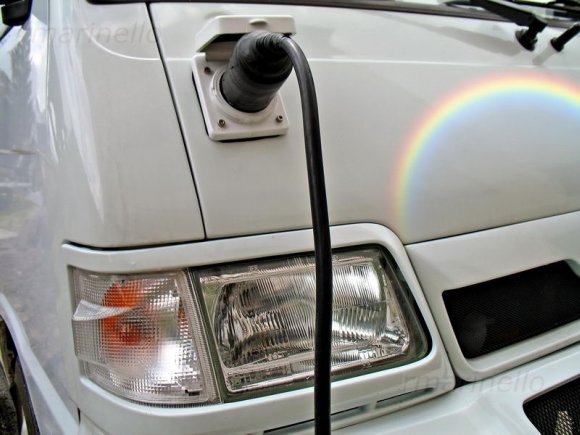
Foreign automakers aren’t the only ones rushing electric cars to market, it’s domestic manufacturers including Ford who’ve unveiled prototypes at this year’s auto show. Unlike the electric golf carts you may be familiar with, the new green fleet of autos are quiet and quick and don’t require the noxious burning of ancient plants.
While this innovation does reduce carbon emissions, what about it’s effect on the power grid? Experts agree that cars won’t burden the grid if owners charge their batteries at night.
Other solutions to our transportation dilemma include airport improvements, expansions, and creating high-speed rail links. Eliminating the horror of terminal gridlock on our runways may lessen headaches for travelers and increase jobs for contractors. High-speed rail links between city centers bring the classic form of train travel up to date ushering time-crunched travelers to and from their points of passage.
For more transportation innovations, check out some of these sites:
How is Twitter helping to provide clean water to developing countries?
Still fuzzy on what Twitter is? If you can express it in 140 characters, you’re ready to “tweet” yourself into the micro-blogging community some 750 thousand strong.
One thing you may find difficult to express in 140 characters, however, is the dire need for clean water in countries outside our own. Unsafe drinking water and lack of sanitation cause 80% of all the sickness and disease worldwide. So how does a seemingly trivial web gadget help this planetary plight?
On February 12th, over 100 cities will be hosting Twestivals, bringing together Twitter communities to raise money and awareness for the non-profit organization called charity:water. All donations will directly fund costly yet vital clean water bearing systems.
Because of the power Twitter has to connect, mobilize, and inform people, these Twestivals have turned a quirky phenomenon into a force for global change.
Join the Twestival in your city by clicking on the following links:
The world’s biggest technology giants have vowed to reduce their carbon emissions to win your green dollar.
So who decides what “going carbon neutral” really means?
According to the Wall Street Journal, companies like Dell, Google, and Yahoo are all active in cutting the amount of carbon dioxide produced in their operations. The problem is that each company defines their carbon neutrality in a different way.
Dell calculates their 490 thousand ton footprint from what comes out of their offices, company cars, and employees who fly. 20 thousand of this was cut making some green building improvements and grounding some of their airborne employees. So what about the other 470 thousand tons?
The solution seems to be in the good work of others. Renewable-energy certificates, or carbon credits, are created by clean energy companies and sold off to offset the remaining tonnage acquired by these big companies.
Until a universal standard for carbon neutrality is decided, the onus is on the consumer to find out how green a product truly is.
For more details on how to calculate corporate carbon neutrality, try out some of the following links:
Children are the future of our planet but are grown-ups doing enough to steer them green?
Everyone had their favorite superhero growing up whether it was Superman, Spiderman, Cat Woman, or Mighty Mouse they inspired and entertained us, and in some cases, may have even been our role model.
With the internet, a new generation of casts and characters are reaching kids in new ways.
Dr. Hufflebot has a worm in his head named Wormulus, and actually that’s the character that I play. He sounds like this. I want results, results I need! Not meaningless mush! The worm actually represents the worm that’s in all of our heads where we just want to block off the natural connection we have to the earth.
This colorful interactive cartoon can be found at GreenGorilla.com. But don’t stop there, there’s a whole lot of positive, kid friendly entertainment to grow and be inspired by. And who knows, maybe your child’s favorite will be a green superhero.
For our full interview with Jay Golden, click here.
For links to cool green cartoons for kids and adults, check these out!
It’s fitting that a new generation of storytellers must adapt to the challenges faced by our future generations, namely kids. Jay Golden, Vice President of New Media at SustainLane Media, is humbly and whimsically leading the charge with a passion for making change fun.
Q: What’s the purpose of creating a cartoon like this?
A: The purpose is very basic; it’s about making change fun.
Q: That’s it.
A: That’s it! It’s straight up. Our objective is to create an inspiring media property that shows kids taking action, having a blast, creating great music, collaborating, and changing the world around them through very simple steps.
Q: How old are the kids that you’re trying to reach?
A: Depending on who you ask, it could be anywhere from 6 to 60 but it starts from 6-10.
Q: So parents can get involved too?
A: Yeah, definitely. Our show is kind of like an antidote to An Inconvenient Truth. There’s a fair bit of gloom and doom in the media - global warming impending, economic dire straits - and our show is about simple ways to understand complex problems like, for example, mountain top removal. Well, if you flip a switch in any one of our cities, you are contributing to somewhere a mountain coming down because of coal. The way we tell that story is that there’s a giant worm, a giant mechanical worm that eats mountains and the kids find out about it and basically they have to come up with a way to turn it around. So, it’s applicable to all generations but really we’re aiming at kids.
Q: You guys also have a show brining up the Great Pacific Garbage Patch. Can you tell me a little about that?
A: Yeah, that was our pilot show. The Great Pacific Garbage Patch is basically about the North Pacific Gire which many people know is this swirling patch of garbage in the North Pacific about twice the size of texas. How do you tell that story in a way that’s digestible so that people can understand and realize that when we take these little plastic pieces and toss them in the trash, sometimes they float off the heap and go into the ocean or sometimes plastic bags will float away and go into the ocean. So in our story, the kids find out that there’s a big island of plastic bags in the North Pacific and they have to go out there, they have to research, figure out what’s going on, all in a kind of fun way, trace it back to what the cause is and then they have to come up with a solution to turn it around and we do it all in a fun and pumpin’ musical way.
Q: It’s definitely fun, the music is awesome, and a lot of the evil goes back to the villain, Wormulus and Dr. Hufflebot. How did you guys come up with those guys? Is it one guys with a worm brain? Tell me a little bit about this character.
A: Dr. Hufflebot has a worm in his head named Wormulus and actually that’s the character that I play. (Modulates voice) He sounds like this! “I want results! Results I need! Not meaningless mush!” So the worm represents the worm that’s in all our heads, that worm that when you get an idea that you just wanna block off the realities and the natural connections we have to the earth, just that compelling drive that we often feel to just accumulate as much as we possibly can. In the show, Hufflebot is always trying to please the worm in his head. He creates this island of plastic bags for him so the worm can have his great dominion over the plastic bags or he helps the worm to create this evil maniacal, mechanical monster that eats mountains so that Wormulus will basically have all the power that he ever desired. And the kind of back and forth is that if Hufflebot pleases Wormulus, if Hufflebot pleases the worm in his head, then eventually the worm will let him be free. Of course, the illusion is that that never really happens, it’s an ongoing journey. The next episode you see Hufflebot back again with the worm in his head on some scheme he’s driving him towards. So we’re all the Hufflebots, really.
Q: KJ, or Kijani the Green Gorilla, who’s kind of the Yoda mystic character. How did you come up with him and how did the kids find him? How did this character come about?
A: Kijani actually means “green” in Swahili. So he’s our green gorilla character that sits in the greenhouse in San Francisco that’s kind of a concealed greenhouse. Basically it was an idea that our company, Sustain Lane’s founder, James Elson, came up with and he really wanted to see this green gorilla character but he didn’t have the other pieces to it. So we kind of put the kids together with this mystical green gorilla who basically represents indigenous wisdom. It’s earth wisdom so when the kids find a problem like Scoot skates into the greenhouse covered in plastic bags then KJ gets a hint and he starts beatboxing and basically bringing down a vision and he brings down a vision and he paints it with his fingers and colors in the air but they’re in symbols, like drawings on a cave. Now the kids have to interpret it, so in the first episode he draws plastic bags and an earth and a swirl in the ocean and the kids have to translate that. They talk amongst themselves, they do the research on the web, and they pixelate out to other places around the world so they can come up with the answers and figure out what the solution is.
Q: I wish I was a part of the pitch meeting for this show… it sounds like so much fun!
A: It was a blast! I put together the smartest people that I know and I got everybody in a room and I said, “Here’s what we wanna do: We wanna create the most inspiring show to help kids take real world steps towards a healthier planet and we wanna make it as fun as possible and we wanna bring in kids all around the world. How do we do this?” And this incredibly intelligent, creative, amazing group of people they all put their heads together and I was fortunate enough to be in the room.
Q: That actually brings me to my last question regarding your contributors and your involvement with Free Range Studios. Now, they produced something called the Meatrix and for anyone who’s listening to this who hasn’t seen the Meatrix, here’s a link! You should now go watch it after you’ve finished listening to this podcast. But, what was your involvement with Free Range?
A: I was fortunate enough to be the Entertainment Producer at Free Range for a couple years, I produced 12 movies for them. Basically, what Free Range does is they create these amazing viral web pieces for social causes which are basically distinct messages kind of wrapped in stories that travel far and wide and Story Stuff is a great example. In fact, The Story of Stuff just made 20 different language versions which is terrific. I basically learned the trade from them and now we work closely. We hired them, actually, to be our Animation and Art Direction group and so I couldn’t be happier.
I just got off the phone with a brilliant young woman named Margaret Lloyd. She’s a grad student at UC Davis going for her Masters in International Agricultural Development and Plant Pathology.
Why is she so significant at this very moment?
Today, January 31st, is the FINAL DAY of her campaign to become the official White House Farmer! Margaret is one of over 100 nominees selected to till, sow, and harvest 5 prime south-facing acres of the White House lawn at the start of this year’s growing season.
Here’s Margaret in her own words:
Q: How’s the campaign going?
A:
Q: How did you become a nominee? What kinds of things on campus have you been doing?
A:
Q: Obviously you have farming experience but have you ever had 5 acres all to yourself? What kinds of crops do you intend to grow?
A:
Q: Do you think you’ll be able to fuel the farm with the crops you grow?
A:
Q: What other challenges are you facing going into this?
A:
Q: What do you have to say to the world in support of your campaign?
A:
Our guest has been Margaret Lloyd, grad student of International Agriculture and Plant Pathology at UC Davis and nominee for White House Farmer.
There’s only a couple hours left to vote so log onto WhiteHouseFarmer.com and vote for Margaret!
For no other reason than this kinda made me chuckle when I first caught wind of it on GreenUpgrader.com and then again when thepoopoopaper Twittered me, it seemed irresistibly interesting. Turns out this elephant dung paper ain’t no joke but a potent little eco craze that’s helping keep these mammoth beasts thriving in the wild.
The diet of an elephant consists mainly of fruits, fibrous grasses and bamboo. These plants can be used to make paper on their own but requires a rather toxic process to achieve what an elephant’s digestive system does on its own. What’s left behind is the undigested plant matter that is first washed, combined with some other plant fibers, molded into “cakes” or “wafers”, left out in the sun to dry, and then peeled off it’s tray to make poop paper products!
The process is as brilliant as it is beneficial. The dung used is collected from conservation parks creating a clean environment for the animals while the whole process from elephant grazing to paper raising creates jobs down the entire line. The Elephant Poo Paper Company, Ltd. even goes so far as to donate a portion of your purchase from their “Poo-tique” to elephant conservation services worldwide.
In this City Spotlight, we travel to the New York City borough of Brooklyn. Better known for its brownstones than green space, it’s home to the the country’s largest oil spill and faces challenges that all growing cities face.
Residents and legislators have had their hands full treating hazardous conditions caused by it’s man-made industrial waterways like the Newtown Creek. An estimated 30 million gallons of oil has been leaking into the soil and water around it since the 1950s.
We have no choice. This is the future. It’s about our economy in the future. It’s about our health in the future. It’s about jobs in the future and we can’t allow the energy industry to get by us.
While your city may not be 2.5 million people crammed into 70 square miles like Brooklyn, increased awareness of your surroundings can secure safe living environments for your family and neighbors.
At the recent USGBC New York Chapter Gala, Borough President Marty Markowitz took the time to address a few things that are on the minds Brooklyn residents, small business owners, and the environmental community. It was clear from his direct and sometimes gregarious responses that while every politician is subject to criticism, Borough President Markowitz certainly isn’t afraid to express his personal views.
Markowitz became involved in politics in the 1970s, by organizing tenant and senior citizen organizations in Flatbush, Brooklyn. His role as a community leader got him elected to the State Senate in 1978, and spent over two decades as a New York State Senator for Brooklyn. During his time as a state senator, he was known for creating a series of oceanfront concerts and other festivals rather than drafting legislation.
Q: What’s Green about Brooklyn?
A: Well, listen, in fact if you look in New York City, the most environmentally active community in the city is Park Slope. We lead the way, it’s true! There’s no question about it.
Q: Can small business get help to clean up toxic industrial sites and move in safely?
A: The answer is yes but it’s going to require a partnership with State and Federal Government and as you know right now, finances are such in the State that are most challenging and I’m sorry to say that we’re on a cutting mode right now but once our economy becomes stronger it’s my hope that the Federal and State Governments will be eager participants and provide the resources to allow the city to clean up. First up, we need that property, we need that land and it’s environmentally a necessity. I can tell you that, for instance, there’s a business in Brooklyn, I think you know, Whole Foods, that is not able to really get going because of the toxic level of the property that they bought and that’s a shame for all of us, the jobs potentially that we’re losing not only there but other locations.
I see the future as very bright, you know why? America has no choice! We have no choice. This is the future. It’s about our economy in the future. It’s about our health in the future. It’s about jobs in the future. And you know what, we in this nation better get on this curve because Japan and Korea and some of those Mid-East countries are already on the track and we can’t be left behind. We already failed in the automobile industry and unless we grab that industry back, we’re gonna be further behind and we can’t allow the energy industry to get by us as well. This is the future of America at stake so I’m convinced that we’ll make it happen.
A: I must tell you that I think we have to provide incentives to corporations to do what they have to do. First you entice then and then you slap them so let’s see what more we can do to entice them before we slap them. I always believe the first approach, the best approach, is to provide incentives and then if they don’t live up to their public responsibilities, then the hammer comes down.
A: Well, there’s some exciting things about the Gowanus Canal. There are proposals, as you know, of Toll Brothers to build new housing there and I believe the key, by having more development around the Gowanus and having more residential units, it will really really put the pressure on Federal, State and City Govern to clean up the Gowanus Canal once and for all.
Q: Are you involved in the Newtown Creek cleanup efforts?
A: Newtown Creek is another area. Riverkeeper and I have been very active, I’m part of the suit and there’s no question that Exxon/Mobil I believe, under Barack Obama and Congress, that we’ll have a much better opportunity to get the oil companies to clean up their garbage. It’s the truth! This is our shot, this is our chance.
If becoming green is on your list of resolutions this new year, why not start with the party?
Planning a sustainable New Year’s celebration takes more than just balloons. It means working to ensure that almost everything from the lights to the decor produces little to zero lingering waste.
Here are some tips to stay green while tipsy:
1.) Buy food that’s locally and sustainable grown and put up a sign that lets your guests know it.
2.) Send web invitations for your party. With a colorful card on a computer screen, you can get more creative, invite more people, and generate no waste.
3.) Make an extra effort to recycle hard goods and compost your food waste. If you don’t have a compost container, put it aside for someone who does.
4.) Organize a carpool and encourage public transportation. This will not only keep gas guzzling down but leave extra room for food & drink guzzling at your celebration.
For more sustainable party tips, have a gander at some of these sites:
While continuing the tradition of giving this holiday season here are some ways to keep your spirits up, pockets jingling and the planet a-ring-a-ling too:
1.) Try solar powered or LED lights on your trees. Keep your display on a timer and you’ll have more to celebrate when the bill comes.
3.) Replant your tree instead of incinerating it. Living Christmas trees can be purchased at some retail lots, most nurseries and garden centers.
4.)Regift! There’s never been a better time to swallow your pride and recycle perfectly good items by giving them to your loved ones. What may be junk to you could make a friend’s holiday a little brighter and your closet a little lighter.
I’m Rich Awn wishing you a happy and healthy holiday season!
For more ways to stay green in your celebration, visit these great sites.
If Green building can save the housing market, what’s holding us back?
Our Government holds the power to dramatically effect the fate of the housing market. Legislation that offers financial incentives to lenders helps developers and homeowners who put a premium on energy efficiency. The House Financial Services Committee decides whether a bill that favors Green building will be approved.
For a tax credit to be passed, it’s gotta be taken out of somewhere else so they have to look for offsets to pay for these tax credits in Green buildings and that has been the major obstacle.
While Republicans objected to the estimated $2.7 billion dollar cost associated with the bill, the Obama administration will surly create a strongly activist Congress to push progressive ideas like this ahead.
For more on the green path out of the housing crisis, check out some of the following links.
As founder and president of Fox Potomac Resources, Sean Todd has over a decade of work within the Legislative Branch, Executive Branch and private sector lobbying arena in Washington, D.C. Prior to founding FPR, he spent three years in the government affairs and marketing offices of International Technology Corporation. He is responsible for the development, implementation and management of firm’s activities, including client development, execution of work and deliverables, and sole P&L responsibilities.
Q: What is holding legislative bodies from passing Green building policies?
A: What’s holding back the House of Representatives specifically in passing financial incentives and tax rebates to promote the use of green technologies in buildings is a policy known as pay-as-you-go. Pay-as-you-go is a principle that if you’re passing tax credits, subsidies as some people call them, that the House of Reps, especially the “blue dogs, the coservative to moderate Democrats, want to make sure that we have a balanced budget. In other words, for tax credits to be passed it’s gotta be taken out from somewhere else in the general revenues. So they have to look for offsets, Rich, in somewhere else in the tax code or in the appropriations process to pay for these tax credits in green buildings and that has been, I would say, the major obstacle in finding those offsets to pay for green building tax credits.
Now in the Senate, there is no obstacle there because the blue dogs are a House body and they don’t have as much as a firm pay-as-you-go principle on the Senate side.
Q: What is the current status of the green building initiative before the House Financial Services Committee?
A: Well, Rich, the current status of Green building tax codes and tax legislation really goes before the House Ways and Means Committee which is responsible for all tax pieces of legislation. So Financial Services is the Committee that really has jurisdiction over mortgage credits, banks… the Financial Services Committee is more of an authorizer, if you will, the Ways and Means Committee has to do more with passing actual tax legislation.
Q: With Republicans objecting to previous bills and other like it, do you feel the new administration will be more aggressive to pushing incentives to building green and other environmental actions going forward?
A: Absolutely, Rich. The Obama Administration will be more aggressive in pushing green building tax credits. If you read Obama’s plan, he has a fairly aggressive plan to make all new buildings carbon neutral by 2030, he has a goal to establish new building efficiency by 50% and by 25% over the next decade, he wants to establish a competitive grant program for early adopters to make awards for those states and localities who take the first steps implementing those new building codes. As far as Federal buildings go, it’s even more aggressive under Obama’s plan; he wants to achieve a 40% increase in efficiency in all new Federal buildings within five years and also ensure that all new Federal buildings have zero emissions, in other words, a zero carbon footprint by 2025. Very aggressive goal.
Q: It seems most developers are on board with this and it doesn’t seem too far fetched.
A: Well, they are expensive and if you build green technologies into your mortgage they’re not as expensive but they are at the moment, sort of expensive to put in there. I think the first opportunity will be with Obama’s windfall profit tax initiative. He wants to all companies to take a share of their windfall profits and use it to provide direct relief to individuals and married couples, $500 for individuals, $1000 for a married couple, and I think that will be an opportunity, perhaps, to insert some of these green building tax credits. We’ll have to wait and see. It really depends on the leadership in the House and Senate, Max Baucus in the Senate and Charlie Rangel in the House.
Q: What is the relationship in your perspective between the economic crisis and the environmental crisis?
A: Well that’s a big question, Rich. I’m not sure I have the scope of a mind to tackle this. I think Obama recognizes that they’re both enormous challenges and Presidents can only do so much, they can only really focus on 4, 5, 6 things at a time and he’s gotta establish his priorities. He said in his second debate, then Senator Obama said that he would have energy as his top priority so we’ll see if he lives up to that commitment.
Is Pixar so prescient? Will our planet one day be deserted with no one left but WALL-E robots cubing massive heaps of trash our civilization simply couldn’t handle? If you haven’t seen the movie, this article is another clear representation of the sad irony found in our increasingly futile effort to reuse and manage waste.
The grim fact being that recycled materials are too costly for countries like China to buy back from top exporters like the US is what’s creating the log jam. This overpriced approach to renewables even goes beyond materials and scares consumers away from such energy utility programs offering wind, hydroelectric, and solar power at a costly premium. Seems the true innovation here requires absolute altruism on the part of it’s inventors to excavate us from these rising mountains of expensive trash.
Greening up your holidays isn’t just a social statement anymore, it’s an economic necessity!
Thanksgiving is upon us and believe it or not, you can Green your turkey day without grossing out your guests. Here are some simple steps to gobble it up green:
1.) As with any event that requires a bit of travel, carpool with your friends and family and consider public transportation where possible. These services are generally extended during the holiday season.
2.) Serve organic spirits! Real cork in your wine or champagne in place of plastic stoppers or twistoff caps is better because cork is renewable and trees aren’t felled for it.
3.) We all know Thanksgiving is all about the sides and they are mostly vegetarian! The meat and poultry industry contributes to the biggest carbon food print in the supermarket so if you can have more fun with veggies, you’ll be doing right by the planet.
and 4.) Don’t use paper or plastic flatware and if you must, make them be biodegradable.
I’m Rich Awn wishing you a happy Thanksgiving. For more tips on a Green feast, check out some of the links below:
Will the crushing economy derail the big Green development plans for our cities and towns?
As cities continue to grow, large developers are incorporating sustainable technologies into their buildings. Reusing existing materials and installing roof mounted solar panels are two simple ways skyscrapers are going green.
Related Companies, is one of the biggest developers in the country and is responsible for some of New York City’s most aggressive skyscraper builds.
Jeff Brodsky, President of the Management Division of Related Companies.
Our expectation is that we’re going to be building green buildings, sustainable buildings, across our portfolio. Our commitment is over 30 billion dollars not only built but also in the planning stages and development. It’s an expectation of us that the client is expecting a sustainable and an environmentally sensitive product and if you don’t build it green now, three years from now it’s gonna be an obsolete building anyway.
And Related Companies is just one of many developers following through with their commitment to Green building despite the current economic landscape.
For more on building Green, click on the following links.
Woah! Been a minute since I’ve posted in here… what HAVEN’T I been doing!!!???
HAPPY HOLLOW-WEEN!!!
Here’s how you deal with Halloween and stay green and save money - FIND EVERYTHING! Step by step on how to retrofit a sustainable rocket (as your costume).
1.) Get lucky.
Riding by at break neck speeds on my Cannondale about two weeks ago, I noticed this fully formed cardboard structure on the side of the road. Without stopping, having only seen it for 2 seconds, and about a half a mile down the road, using my powers of Halloween intuition, I thought it might’ve made the best rocket costume ever.
Sure enough, it turned out to be the coolest rocket I’ve ever seen made of cardboard, definitely some kind of Scandanavian kids toy judging by how well it’s crafted. Kicking myself for not having come for it the night before, I found it the following day (luckily) to have been kicked in, stomped on, and pissed on. The smell of stale urine actually tuned me away at first and I finally stiffened up and vowed to restore it to is original splendor in the name of all things hallowed.
2.) Cut out the urine-soaked base.
Working on the refurbishing and retro-fitting for the zero rocket, the foul odor emanating from it’s interior was stifling. With a few quick slashes of a box cutter, the problem was solved and peace was restored to the restoration. Be sure to cut out just enough for the structure to fit firmly on the hips without compromising the structures overall integrity.
3.) Add a harness.
Using the camel back attachment for my girlfriend’s hiking bag, I laced a piece of nylon rope though holes I made 1″ apart along the back, poking them through with a fillips head screwdriver. Just like lacing a sneaker, I cris-crossed the rope over the back of the camel back and under the shoulder straps at the height necessary for the rocket to sit comfortably just below my waist and high enough for me to see out every port hole.
4.) Add an interior light.
Using rechargeable batteries and this cool old fluorescent light I found in the bottom of a tool box, I used the aforementioned “shoe string” principle to attaching the light. Less holes were necessary and shorter rope but it worked just fine.
Et voila! As you can see from the slide show, it looks amazing… and the best part about it is that it’s recyclable and/or you and an agressive mob of candy-crazed trick-or-treaters can bash the hell out of it at the end of the night.
One of the hottest topics in food is to go from farm to table. But what if you live in the middle of a city?
Urban farming is not as strange as it may sound. All over the world, city dwellers with roots in agricultural communities have taken to the rooftops and vacant lots to harvest they’re own crops, raise bees, and even livestock.
Sarita Daftary, Youth Program Coordinator and Project Director.
“Before we even started our project, East New York had over 140 registered gardens. So what we really started to do was to support those gardens and use them as a resource for food production. And we also added in the youth training component and leadership development.”
Success stories like 12 year old interns going on to start their own farms to senior citizens organizing farmers markets and helping to feed those in need are just two examples of the power of organized urban farming.
For more on East New York Farms and urban farming, visit the links below.







![[Post to Twitter]](/wp-content/plugins/tweet-this/icons/tt-twitter.png)
![[Post to Digg]](/wp-content/plugins/tweet-this/icons/tt-digg.png)
![[Post to Reddit]](/wp-content/plugins/tweet-this/icons/tt-reddit.png)
![[Post to StumbleUpon]](/wp-content/plugins/tweet-this/icons/tt-su.png)